
Content & Semantic SEO
Semantic SEO: Beyond Keywords to Meaning and Context
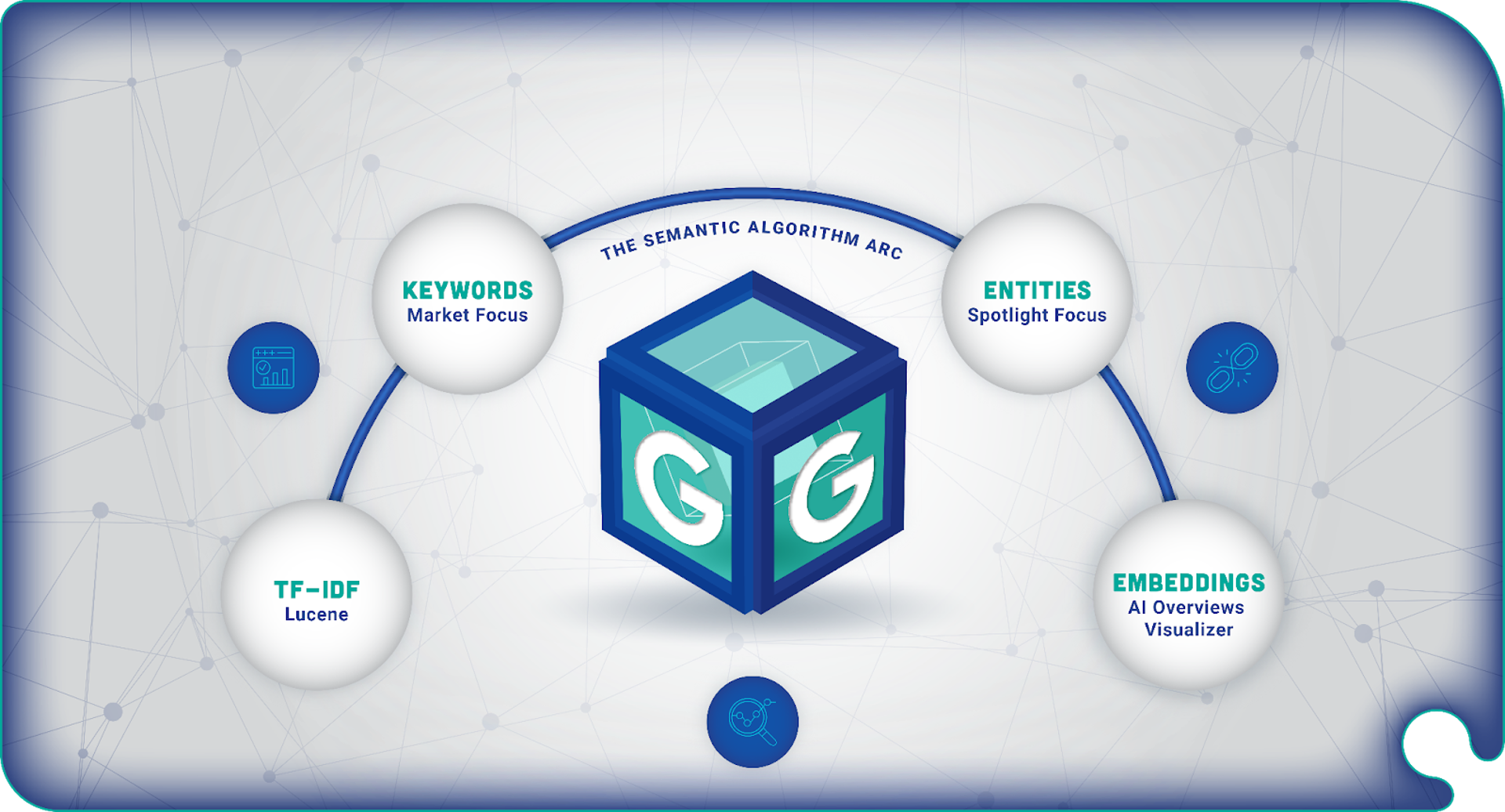
Semantic SEO is a rapidly growing trend in the world of search engine optimization. It involves using semantic markup, natural language processing, and other techniques to improve the relevance and accuracy of search engine results.
This article will provide an in-depth overview of semantic SEO, including its benefits, challenges, and potential future developments.
In the early days of the internet, search engines were relatively simple. They relied on basic keyword matching algorithms to return results for a given query. However, as the internet has evolved, search engines have become increasingly sophisticated, and they now use a wide range of techniques to improve the relevance and accuracy of their results.
One of the most promising developments in this area is semantic SEO, which involves using semantic markup and natural language processing to improve the meaning and context of search engine results.
What Is Semantic SEO?
Semantic SEO is the practice of structuring and writing content so search engines and AI systems can clearly interpret what it means, which questions it answers, and how it relates to other information.
Consider the phrase “jaguar speed.”
Those two words could describe the running speed of an animal or the performance of a Jaguar vehicle.
A page discussing big cats, hunting, habitat, and running speed establishes one meaning.
A page discussing horsepower, acceleration, engines, and Jaguar models establishes another.
The surrounding information resolves the ambiguity.
Search engines use natural language processing and other signals to interpret this context. Semantic SEO makes the intended meaning of a page easier to establish.
What Gives Content Meaning?
Semantic meaning comes from several connected layers of content.
The primary subject establishes what the page is about. Entities identify the people, products, organizations, places, and concepts being discussed. Relationships explain how those entities connect. Individual passages develop specific ideas. The wider website establishes where the page belongs and how it differs from related content.
A Clear Subject and Intent
Every important page should have a clearly defined job.
Someone searching for “semantic SEO,” for example, might want a definition, implementation guidance, examples of semantic relationships, or information about its role in AI search.
A page should identify the primary need it intends to satisfy and build its structure around that intent.
One useful way to define that role is to complete:
This page should be the clearest answer on our website for ________.
A specific answer helps determine which sections belong, which supporting concepts are necessary, and where the content should stop.
Our guide to search intent explores how the need behind a search or prompt can shape the content intended to satisfy it.
Entities and Their Relationships
Entities are identifiable subjects such as people, companies, products, locations, and concepts.
Clear entity references help resolve ambiguity.
“Apple” could describe a fruit, a technology company, a record label, or someone's name. References to the iPhone, Mac, Tim Cook, and consumer electronics quickly establish the intended entity.
Meaning becomes more precise when content also explains how entities relate.
Consider:
Search engines use embeddings to compare the meaning of content and queries.
The sentence establishes specific relationships:
Search engines → use → embeddings
Embeddings → compare → content and queries
Those connections communicate more than the presence of several related terms. They establish what each concept does and how the ideas interact.
This is the foundation of semantic triples, where relationships can be represented through subject, predicate, and object.
Clear semantic writing makes important relationships explicit.
Focused Passages
Meaning also exists at the passage level.
Search and AI systems can evaluate smaller sections of a page as distinct units of information. Think of these as individual chunks of content, each with the opportunity to contain a strong definition, a detailed example, an implementation section, an FAQ, and product information to contribute to their semantic signals.
A useful passage has a recognizable job:
- Define a concept
- Answer a question
- Explain a mechanism
- Develop an example
- Support a decision
The heading establishes that job. The content beneath it should complete the idea before moving into another subject.
Focused sections give readers clearer answers and provide search and retrieval systems with more coherent information to interpret.
Website Context and Differentiation
Pages also gain meaning through their relationship with the rest of the website.
Internal links, anchor text, breadcrumbs, hubs, related resources, and neighboring content provide additional context about where a page belongs.
A Semantic SEO pillar may connect naturally to resources about natural language processing, semantic triples, search intent, embeddings, or AI visibility. Each supporting resource can deepen a specific part of the larger subject.
Together, those relationships establish a content hierarchy: This page owns the broader concept. These pages explore individual mechanisms. Another page serves a different question or intent.
This becomes increasingly important as a website grows.
Larger more established websites often contain years of content created by different teams for different campaigns, audiences, and priorities. Individual articles may remain useful while their roles within the larger content ecosystem become unclear.
Semantic differentiation helps each page maintain a distinct purpose.
Where Semantic Clarity Breaks Down
Semantic problems often emerge from how content is scoped, expressed, differentiated, and rendered.
Multiple Pages Occupy the Same Semantic Territory
Two pages can be semantically similar without using identical language.
One might target “Enterprise SEO Software” while another targets “SEO Platforms for Large Websites.” Different wording still produces substantial overlap when both pages address the same audience, problems, capabilities, and buying intent.
That overlap weakens page ownership.
Clear differentiation can come from a different audience, intent, use case, level of technical depth, or role within the customer journey. Closely overlapping pages may also benefit from consolidation when a meaningful distinction cannot be established.
This issue becomes especially difficult to spot across large content libraries, where similar resources may have been created years apart.
A Page Accumulates Too Many Purposes
Mature content often expands over time.
A resource may begin with one clear subject and later gain new definitions, FAQs, use cases, comparisons, product sections, and adjacent topics through repeated updates.
Every addition changes the semantic representation of the page.
Useful supporting information strengthens the primary subject. Excessive expansion broadens the page until its central purpose becomes difficult to identify.
Clear content boundaries help maintain a recognizable semantic center.
Important Relationships Remain Implicit
Related terminology does not automatically communicate how ideas connect.
A page can repeatedly mention structured data, entities, schema markup, and search engines while leaving the relationship between those concepts unclear.
Statements about what something does, affects, contains, supports, produces, or depends on make those relationships explicit.
Strong semantic writing explains the connections carrying the meaning of the page.
Rendered Content Dilutes the Primary Subject
The article or landing-page copy entered into a CMS represents only part of the content search systems may receive.
Navigation, related-content modules, review blocks, legal notices, calls to action, responsive components, and other template elements can add substantial text to the rendered HTML.
A recurring component becomes especially consequential on enterprise websites because the same semantic signals may appear across thousands of URLs.
A page primarily about one subject can therefore inherit additional language from the template surrounding it.
Reviewing the complete rendered page shows whether those recurring elements reinforce the intended meaning or introduce competing signals.
Generic Language Weakens Differentiation
“Improve performance.”
“Drive results.”
“Deliver powerful insights.”
“Create better experiences.”
These phrases communicate broad benefits while providing little information about the mechanism, audience, or situation involved.
Specific language creates stronger semantic distinction.
A useful statement makes clear who it applies to, what problem it addresses, how something works, and which outcome it supports.
This helps readers understand the content while giving search and AI systems more concrete relationships to interpret.
A Practical Semantic SEO Review
A semantic review works best when it evaluates the page against a defined role instead of searching for additional related terminology to add.
Define the Page's Role
Establish the primary question, audience, subject, and purpose of the URL.
Write down what this page should own within the website and where adjacent resources should take over.
This definition becomes the standard for evaluating the content.
Compare It With Neighboring Pages
Review the pages addressing closely related subjects.
Identify where their roles are clear and where they begin competing for the same semantic territory.
Decide which page should own the broader topic, which resources should provide supporting depth, and which URLs need stronger differentiation or consolidation.
Review the Content Passage by Passage
Read each major section independently.
Check whether the heading and copy develop one coherent idea, whether important entities are identifiable, and whether the relationships needed to understand the passage are explicit.
Flag sections that drift into adjacent subjects or duplicate material covered elsewhere on the page.
Inspect the Complete Rendered Page
Review the content search systems actually receive, including recurring and visually hidden elements outside the primary copy.
Pay particular attention to template-level signals. A repeated element that appears across thousands of pages can influence semantic focus far beyond a single URL.
Reinforce the Intended Relationships
Use the wider website to support the page's role.
Connect relevant supporting resources with descriptive anchor text. Establish clear relationships between parent topics and deeper resources. Give strategically important subjects recognizable primary pages.
Internal links also influence authority distribution. Our guide to Link Flow in SEO explores how those connections determine which pages receive the strongest structural support.
Semantic SEO focuses on the meaning and topical relationships those connections communicate.
Semantic SEO Creates Stronger Evidence for AI Systems
Semantic clarity gives AI systems more usable information to interpret and retrieve.
Focused passages establish what information is available. Explicit entities and relationships clarify its meaning. Distinct page roles help separate one resource from another.
These qualities create an important foundation for AI visibility.
AI selection introduces additional considerations, including retrieval, authority, corroboration, prompt alignment, and competitive evidence.
Our guide to AI Visibility explores that layer in greater depth.
How Market Brew Helps Diagnose Semantic Clarity
SEO teams can perform semantic analysis manually by defining page roles, comparing related URLs, reviewing individual passages, inspecting entities and relationships, and evaluating rendered content.
But doing this at scale makes those relationships difficult to evaluate consistently.
Market Brew helps surface the patterns that deserve attention across the full website.
Fan Out analysis can reveal meaningful gaps in the concepts supporting a subject, helping teams develop more complete content without relying on keyword expansion alone.
Answer Alignment and passage analysis identify where content loses focus, helping teams concentrate revisions on the sections creating semantic drift.
Topic Clusters and similarity analysis expose overlapping semantic territory across large content libraries, making page ownership, differentiation, and consolidation decisions easier to make.
Together, these views help teams identify:
- Which page should own a subject
- Where content begins drifting from its intended meaning
- Which URLs have become too semantically similar
- Which sitewide elements are influencing large groups of pages
Market Brew makes these relationships easier to evaluate across entire sites, allowing teams to focus their effort on the content and structural patterns creating the greatest semantic ambiguity.
Beyond Keywords
Semantic SEO makes the intended meaning of content clear.
Strong pages establish a defined subject, explain the relationships that matter, organize information into focused passages, and occupy a distinct role within the wider website.
Maintaining that clarity becomes harder as enterprise websites grow and their content ecosystems become more complex.
Market Brew helps teams identify semantic overlap, content drift, unclear page ownership, and sitewide patterns that weaken meaning at scale.
Clearer content gives search engines, AI systems, and readers a stronger understanding of what each page contributes and when it is relevant.
From ambiguity to actionable insight.
Decode ranking systems, surface leverage points, and deploy with clarity.